
Repair or Replace Furnace? What to Check
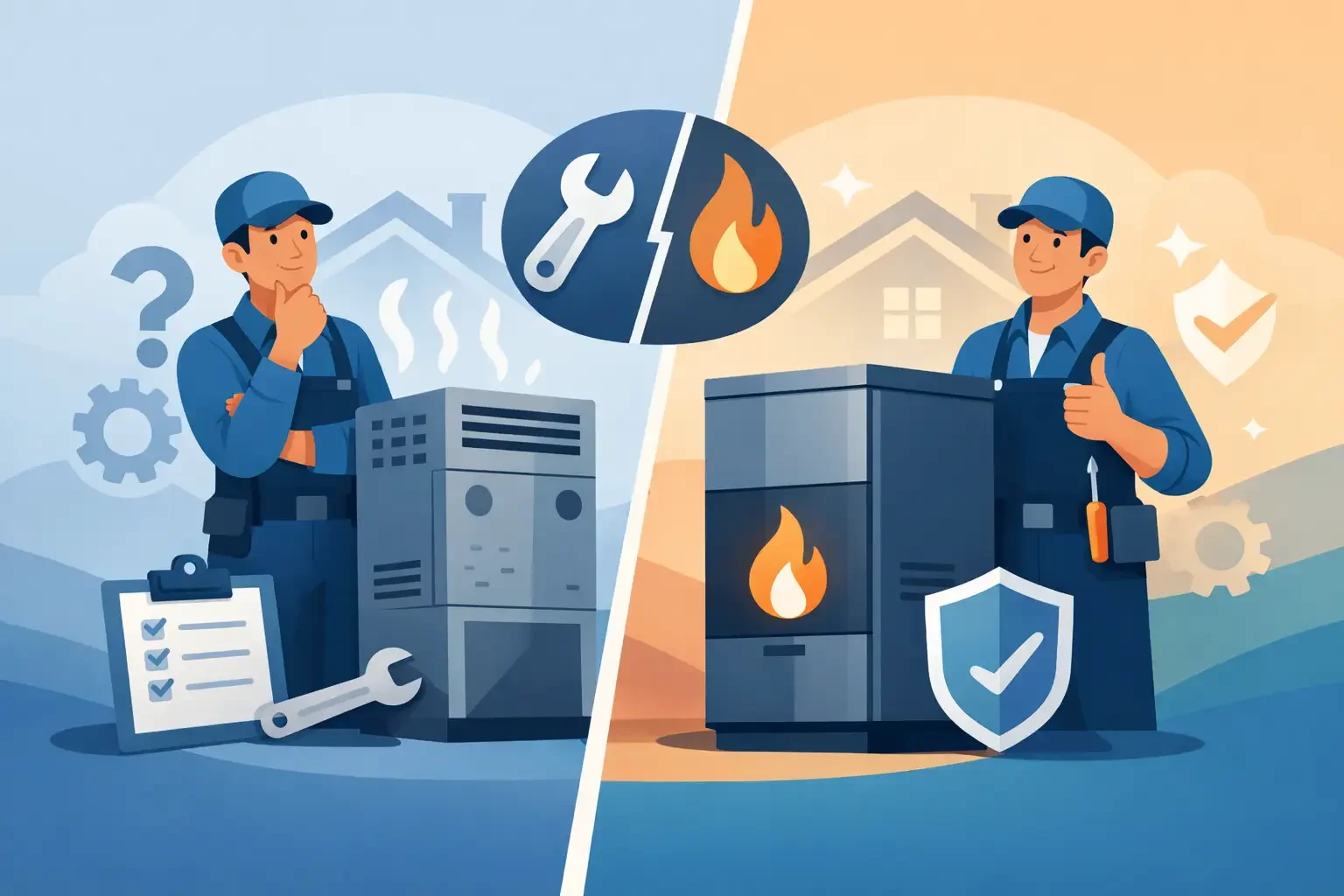
A furnace that starts acting up on a cold Las Vegas night puts most homeowners in the same spot fast: do you repair or replace furnace equipment and move on, or put that money toward a new system? It is not always an easy call, and anyone who gives you a one-size-fits-all answer is probably selling something. The right choice depends on the age of the system, the type of repair, your utility bills, and how reliably your heat has been performing.
At a company built on the idea that we are repairmen, not salesmen, this question matters. A good technician should be able to tell you when a repair makes sense, when replacement is the smarter investment, and when the answer falls somewhere in the middle.
When repair or replace furnace decisions get harder
Some furnace problems are straightforward. A worn igniter, bad flame sensor, failing capacitor, or clogged filter can often be repaired without a major financial hit. If the rest of the system is in solid shape, a targeted repair can buy you years of dependable service.
The tougher calls usually happen when the furnace is older, parts are failing more often, or comfort has been getting worse over time. Maybe some rooms stay cold while others heat up too fast. Maybe your system kicks on constantly but never seems to settle the house at a comfortable temperature. Maybe your gas bill keeps climbing even though your routine has not changed.
Those are the moments when a repair is no longer just a repair. It becomes a decision about long-term value.
Start with the age of the furnace
Furnace age is not everything, but it sets the stage. Most residential furnaces have a service life of around 15 to 20 years, depending on maintenance, usage, installation quality, and climate conditions. In Southern Nevada, people often focus more on their AC because of the heat, so heating systems can go long stretches without much attention. That can hide wear until a cold snap exposes it.
If your furnace is under 10 years old and the repair is relatively minor, repair is usually the practical move. If it is between 10 and 15 years old, you have to look more closely at efficiency, condition, and repair history. Once a furnace is pushing 15 to 20 years, replacement starts making more sense, especially if the repair is expensive or the system has had repeated issues.
Age alone should not force a replacement. A well-maintained furnace can still be worth repairing. But the older the unit gets, the less room there is for a big repair to pay off.
The repair cost matters, but so does the type of failure
Homeowners often hear a rule about replacing the furnace if the repair cost is close to half the value of a new system. That can be a useful guideline, but it is not perfect. A better question is what failed and what that failure says about the rest of the system.
If the problem is isolated and common, repair is often the right call. If the repair involves a heat exchanger, blower motor, control board, or multiple failing components, the math changes. These are not just bigger repairs. They can signal a system that is wearing out as a whole.
Safety matters here too. A cracked heat exchanger is not something to patch up and hope for the best. If there is a legitimate safety issue, replacement may be the responsible option even if you were hoping to squeeze out another season.
A trustworthy technician should explain whether the failed part is a normal wear item or a sign of broader decline. That distinction makes a real difference.
Frequent breakdowns are a warning sign
One repair in a few years is one thing. Two or three service calls in the same season is something else.
If your furnace keeps breaking down, you are not just paying for parts and labor. You are paying in stress, lost time, and uncertainty. Every cold morning becomes a question mark. For families, older adults, and anyone running a small business or managing a rental property, unreliable heat is more than an inconvenience.
At some point, repeated repairs stop being the budget option. They turn into a cycle that drains money without giving you confidence. Replacing an unreliable furnace can cost more upfront, but it often gives you back predictability, lower operating costs, and fewer emergency calls.
Rising utility bills can tip the scale
An aging furnace may still run, but that does not mean it is running efficiently. As components wear down, systems often have to work harder and longer to produce the same heat. That usually shows up in your monthly bill before it shows up as a total breakdown.
If your heating costs have been climbing and your furnace is older, replacement may save enough in energy use to make the investment more reasonable. Newer systems are designed to heat more efficiently and maintain more consistent comfort. That can be especially valuable in homes with uneven airflow, older ductwork, or rooms that never seem to warm up.
Efficiency should not be used as a scare tactic. If your current furnace is working well and the repair is small, replacing it purely for efficiency may not be urgent. But if high bills are paired with age and repair issues, the case for replacement gets stronger.
Comfort problems tell you a lot
A furnace does not have to be completely dead to be failing you. Many homeowners live with warning signs for years because the system still turns on.
If your home feels dusty, dry, noisy, unevenly heated, or slow to warm up, those are clues worth paying attention to. The same goes for a furnace that short cycles, struggles to keep up on colder nights, or needs constant thermostat adjustments. Sometimes the issue can be repaired. Other times, it points to a system that is simply no longer a good fit for the home.
That is why the best repair-or-replace conversation is not just about the broken part. It is about how the whole system has been performing. If comfort has been poor for a while, replacement may solve more than the immediate issue.
When repair is clearly the better choice
There are plenty of times when repairing your furnace is the smartest move. If the system is fairly young, the issue is limited, and the repair cost is reasonable, there is no sense replacing a unit that still has useful life left. The same goes for furnaces with a clean service history and no major comfort or efficiency complaints.
Repair also makes sense if you need time to plan. Sometimes the furnace may be older, but the current issue is manageable and a repair can safely get you through the season while you budget for replacement later. That is a practical, honest option when the circumstances support it.
No homeowner likes being pushed into a major purchase on the spot. A good technician respects that and gives you the real picture.
When replacement is the smarter investment
If your furnace is near the end of its life, needs a major repair, has become unreliable, or is driving up your energy bills, replacement often saves money over time. It can also improve comfort in ways a repair cannot.
For some Las Vegas homeowners, replacement is also about peace of mind. You do not want to wonder if your heater will make it through the next cold stretch, especially if you have kids at home, older family members, or tenants depending on that system. A new furnace can bring quieter operation, stronger airflow, better temperature control, and fewer surprises.
There is also value in knowing that the recommendation is based on condition, not commission. That is the difference between pressure and real service.
How to make the call without getting sold
If you are trying to decide whether to repair or replace furnace equipment, ask for a clear explanation in plain language. How old is the system? What exactly failed? Is this a common repair or a sign of wider problems? What could reasonably fail next? How much life is realistically left in the unit?
You should also ask what each option gets you. A repair should come with an honest expectation of performance, not false promises. A replacement recommendation should be tied to reliability, safety, efficiency, or long-term cost, not fear.
That kind of conversation helps you make a confident decision instead of reacting under pressure. In a market where homeowners have heard too many sales pitches, straightforward diagnostics matter.
For local homeowners, that is where a technician-led company like Mr. Gates HVAC can make the process feel a lot more manageable. You want someone who can fix what is fixable, recommend replacement when it is truly warranted, and tell you the difference without wasting your time.
If your furnace is acting up, do not focus only on the immediate repair bill. Look at the full picture - age, safety, efficiency, reliability, and how well your home has actually been heating. The best choice is the one that keeps your household comfortable without paying twice for the same problem later.