
AC Repair vs Replacement: How to Decide
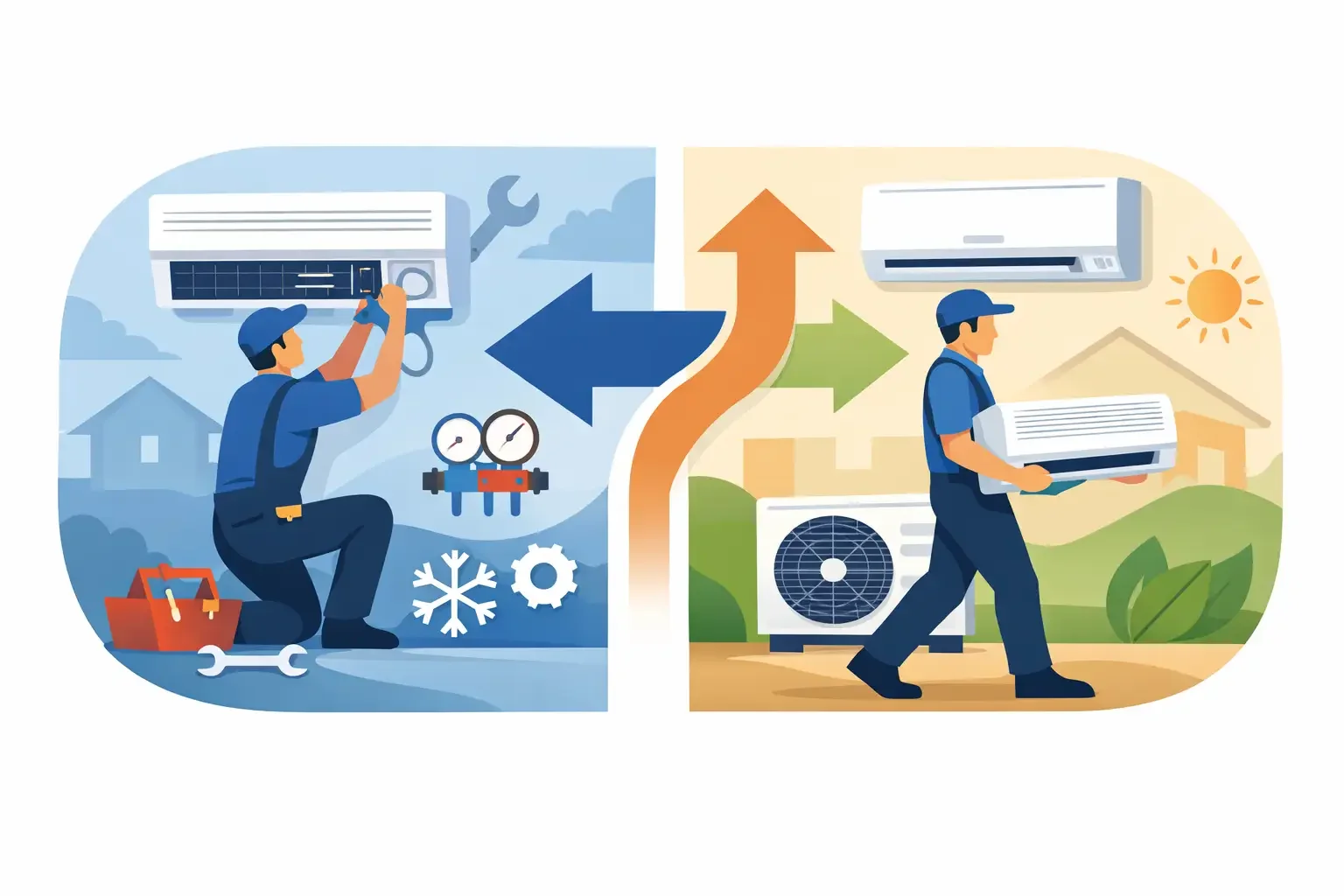
Your AC quits in July, the house starts climbing past 80, and suddenly the question is not theoretical anymore. When homeowners in Southern Nevada ask about ac repair vs replacement, they usually want one thing - an honest answer that makes sense for their home, budget, and how long they plan to stay there.
That answer is rarely one-size-fits-all. Sometimes a repair is clearly the right move. Sometimes replacement will save money, stress, and repeat breakdowns. The key is looking at the full picture instead of reacting to the first big estimate or the first sales pitch.
AC repair vs replacement starts with the actual problem
A failed capacitor, worn contactor, clogged drain line, or bad thermostat can shut a system down without meaning the whole unit is at the end of its life. These are repair issues. In many cases, they can be fixed quickly and reasonably, especially if the rest of the system is still in solid shape.
On the other hand, a major compressor failure, repeated refrigerant leaks, or an evaporator coil problem in an older unit changes the conversation. Those repairs tend to cost much more, and they do not always buy you much time. If the system is already aging and struggling through Las Vegas heat, putting a large amount of money into one more repair may not be the smartest use of your budget.
This is why good diagnostics matter. You should know what failed, why it failed, what the repair costs, and whether other parts are likely to follow. Honest HVAC service should feel like getting a straight answer from a repairman, not being pushed into a full system sale before anyone has explained the issue.
When repair usually makes more sense
If your AC is newer, has been maintained, and the repair is limited to one component, repair is often the sensible choice. Most homeowners do not need to replace a system just because it stopped working once.
Repair is usually worth serious consideration when the unit is under 10 years old, the breakdown is isolated, and your energy bills have been fairly normal. It also makes sense when the system still cools evenly, keeps up during the day, and has not needed repeated service calls over the last few summers.
In a desert climate, that service history matters. An AC that has run through several Las Vegas summers without major issues has already shown some resilience. If the current problem is minor to moderate, a quality repair can get you back to reliable comfort without taking on the cost of a full replacement.
Budget matters too. Not every household is ready for a new system on short notice, and that is real life. A good technician should be able to tell you whether a repair is a reasonable bridge or just a temporary patch that will leave you calling again in a month.
When replacement is the better long-term move
There are times when replacing the unit is not an upsell. It is simply the better decision.
If your system is 12 to 15 years old or more, the odds of more frequent repairs start going up. Parts wear out. Efficiency drops. Cooling performance gets weaker, especially during the hottest stretches of the year when your system has to work the hardest. Even if it is still running, it may be costing you more every month than you realize.
Replacement also becomes more attractive when repair costs are high relative to the age and condition of the system. Homeowners often hear the old rule about replacing when a repair approaches half the value of the system, but the better question is this: what are you really getting for that repair? If you spend a large amount today and still have an older system with declining efficiency and no guarantee against the next failure, the math can shift fast.
Uneven cooling, loud operation, high electric bills, weak airflow, and constant breakdowns are all signs the unit may be wearing out as a whole, not just suffering one isolated problem. At that point, replacement can give you better comfort, lower operating costs, and fewer surprises during peak summer heat.
Age, efficiency, and Las Vegas heat
Not every market puts the same strain on AC equipment. Southern Nevada is different. Long cooling seasons, extreme temperatures, and heavy daily runtime mean your system does not get much of a break.
That climate can make an older unit feel much older in practical terms. A system that might limp along elsewhere can struggle badly here. If your AC is running almost nonstop, barely hitting the thermostat setting, and driving up your power bill, replacement may offer more than just a new machine. It may solve comfort problems your current system has been masking for years.
Efficiency matters, but it should be looked at honestly. Newer equipment can reduce energy use, especially if your current unit is well past its prime. But savings depend on the condition of your ductwork, insulation, thermostat settings, and how the system is sized for the home. A trustworthy recommendation should explain those trade-offs instead of promising dramatic savings without context.
The cost question homeowners really care about
Most people asking about ac repair vs replacement are really asking, what costs less over the next few years?
A small repair almost always costs less today. That part is easy. The harder question is whether that lower upfront cost leads to more expenses later. If your system needs one repair now, another next season, and still leaves you with high monthly bills, the cheaper option today may be the more expensive option overall.
That said, replacement is not automatically the better value. If your unit has good life left and the needed repair is straightforward, replacing it too early can mean spending thousands before you need to. That is why honest HVAC companies walk you through both paths.
Ask for the repair cost, the expected remaining life of the system, whether the repair addresses the root problem, and how likely the technician thinks additional repairs are in the near future. If a contractor cannot talk through those points clearly, keep asking questions.
Signs you may be getting pushed too fast
Homeowners in this market have good reason to be cautious. Too many people have been told they need a full replacement before anyone has taken the time to explain what failed.
Be careful if the recommendation jumps straight to replacement without a clear diagnosis, if you are told your system is "old" without any discussion of condition, or if there is pressure to decide immediately. A trustworthy technician should be able to explain the pros and cons of repairing and replacing, not just steer every problem toward the larger invoice.
That is one reason the message matters: we are repairmen, not salesmen. For a company like Mr. Gates HVAC, that is not just branding. It is the difference between solving the problem in front of you and using a breakdown as a sales opportunity.
How to make the right call for your home
Start with the facts. How old is the system? What exactly failed? How much is the repair? Has the unit needed repeated work? Are your utility bills climbing? Is your home still comfortable through the hottest part of the day?
Then think about your plans. If you expect to stay in the home for years, replacement may be worth more if your current unit is aging and unreliable. If you need a practical fix to get through now and the system is otherwise in decent condition, repair may be the smarter move.
There is also a middle ground. Sometimes a repair is the right decision today, even if replacement is likely in the next year or two. That is not failure. It is planning. A good technician should be able to tell you when a repair buys meaningful time and when it is just delaying the inevitable.
If you feel unsure, that is normal. HVAC decisions get stressful fast when the house is hot and you need an answer now. The best help is clear, pressure-free guidance from someone willing to tell you when a repair makes sense and when replacement really is the better investment.
A good AC decision should leave you feeling informed, not sold. When the recommendation matches the problem, your comfort, your budget, and the reality of Las Vegas heat, you can move forward with confidence.