
Guide to Seasonal HVAC Maintenance
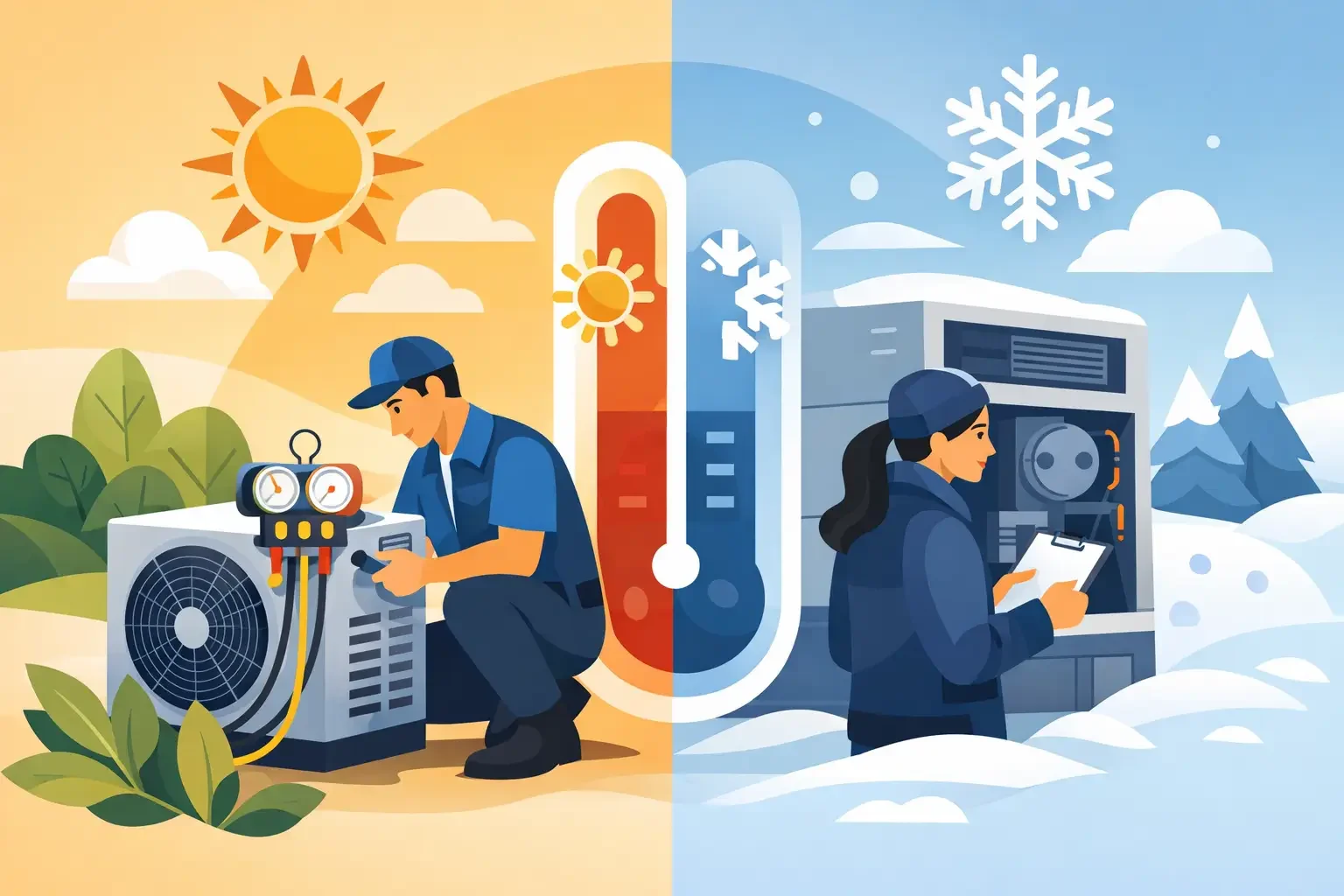
When your AC quits in July or your heater stumbles on a cold desert night, seasonal maintenance stops feeling optional. A good guide to seasonal HVAC maintenance is really about staying ahead of expensive surprises, especially in Las Vegas and Henderson, where cooling systems work hard for long stretches and heating equipment can sit untouched until you suddenly need it.
Around Southern Nevada, HVAC wear shows up differently than it does in milder climates. Dust builds up fast. Filters clog sooner. Outdoor units take a beating from heat, debris, and long run times. That means the best maintenance plan is not complicated, but it does need to match the desert and the way your system is actually used.
Why seasonal HVAC maintenance matters here
A lot of homeowners only think about HVAC service when something stops working. That is understandable, but it usually costs more in the long run. Small issues like a weak capacitor, a dirty coil, or a loose electrical connection can turn into a no-cool call on the hottest day of the year.
Seasonal maintenance helps in three ways. First, it lowers the chance of a breakdown when your system is under the most stress. Second, it helps your equipment run more efficiently, which matters when summer power bills climb. Third, it gives you a clearer picture of whether your system needs a repair, a tune-up, or, in some cases, replacement. Honest diagnostics matter here. Not every older unit needs to be pushed out the door just because it has a problem.
Spring: get your cooling system ready before the heat hits
In Southern Nevada, spring is the big one. If there is one visit you do not want to skip, it is your pre-summer AC check.
Start with the basics at home. Change or inspect the air filter. If it looks dusty, replace it. A clogged filter restricts airflow, makes the system work harder, and can lead to frozen coils or uneven cooling. In homes with pets, renovations, or high dust levels, filters may need to be changed more often than the package suggests.
Next, look at the outdoor condenser. Clear away leaves, weeds, plastic, and anything else that can block airflow. You want open space around the unit so it can reject heat properly. In desert areas, dirt and dust can collect on the coil fins, and that buildup reduces efficiency over time.
Inside, pay attention to early warning signs. If rooms cool unevenly, airflow feels weak, or the thermostat reading does not match how the house feels, those are clues worth checking before the first heat wave.
What a spring maintenance visit should include
A proper cooling tune-up should go beyond a quick filter swap. A technician should inspect electrical components, test system performance, check refrigerant levels if needed, clean key components, inspect the condensate drain, and verify thermostat operation. The goal is not to sell a new unit. It is to catch wear before it becomes a failure.
If your system is older, spring is also the time to ask practical questions. Is it still cooling efficiently? Are repairs stacking up? Is it safe to keep repairing for another season? Sometimes the right answer is repair. Sometimes replacement makes more financial sense. It depends on age, condition, repair history, and your summer electric bills.
Summer: protect performance during peak demand
Once the extreme heat settles in, maintenance becomes more about monitoring than major prep. Your system may run for long stretches, especially in the afternoon and early evening. That is normal in Las Vegas. Constant cycling on a 110-degree day does not always mean something is broken.
Still, there are signs you should not ignore. Warm air from the vents, ice on the refrigerant line, rising indoor humidity, strange noises, or a sudden spike in your power bill can all point to a problem. Waiting usually does not help.
During summer, keep filters clean and vents open. Make sure furniture or rugs are not blocking supply or return vents. If you have a programmable or smart thermostat, review the settings. Dramatic temperature swings can make your system work harder than necessary. A steady, realistic setting is usually better than forcing the unit to recover from a big setback during the hottest part of the day.
A quick note on airflow and insulation
Not every comfort issue is caused by the equipment itself. In some homes, the HVAC system is doing its job, but attic insulation, duct leakage, or hot spots from sun exposure are making the house feel uneven. That is why maintenance should include a real conversation about what you are experiencing indoors, not just a quick glance at the unit.
Fall: switch focus from cooling to heating
Heating does not get the same attention in Southern Nevada, but it still matters. Fall is the right time to test the furnace or heat pump before temperatures drop. The first cold night is a bad time to find out your igniter failed or your thermostat is not switching modes correctly.
Turn the heat on before you need it regularly. If you notice a burning smell for a short time, that can be normal when dust burns off after months of sitting. If the smell lingers, or if you hear banging, rattling, or delayed ignition, schedule service.
A fall heating check should include inspection of burners or heating elements, safety controls, airflow, electrical components, and thermostat response. Gas furnaces also need attention to combustion-related issues and safe venting. This is not an area for guesswork.
Winter: keep the heater reliable, even if it runs less often
Winter HVAC demands are lighter here than in colder states, but that can create its own problems. Systems that sit idle for long periods can develop issues that go unnoticed. Then, when a cold snap hits, homeowners are surprised by no-heat calls.
During winter, keep an eye on filter condition and pay attention to startup behavior. If the furnace short cycles, struggles to maintain temperature, or suddenly sounds louder than usual, have it checked. Smaller heating problems can often be repaired quickly if caught early.
Winter is also a smart time to think ahead. If your AC barely made it through the last summer and your heater is aging too, the slower season can be the best time to plan repairs or replacement without the pressure of an emergency.
Your simple guide to seasonal HVAC maintenance at home
Homeowners can handle a few maintenance basics themselves, and they make a real difference. Replace filters on schedule, keep supply and return vents unobstructed, clear debris from the outdoor unit, and pay attention to changes in sound, airflow, temperature, or energy use.
What you should not do is open electrical compartments, guess at refrigerant issues, or ignore repeated tripped breakers. HVAC systems have parts that require licensed service, and a wrong move can damage the system or create a safety issue.
The best approach is a mix of homeowner upkeep and professional inspection. That keeps routine tasks simple while making sure hidden problems do not get missed.
When maintenance is enough and when it is not
This is where homeowners often get frustrated. They call for service and worry they will get a sales pitch instead of a straight answer. The truth is, maintenance is valuable, but it is not magic.
If your system is relatively young, has been maintained, and only has minor wear, a tune-up and targeted repair may be all you need. If the unit is older, struggling in peak heat, using costly refrigerant, or needing frequent repairs, maintenance may only buy limited time. Neither answer is right for every home.
A trustworthy technician should explain the condition of the equipment, what can be repaired, what should be watched, and when replacement starts to make financial sense. That is the kind of approach homeowners appreciate from companies like Mr. Gates HVAC - clear recommendations, fair pricing, and no pressure to replace equipment that still has useful life left.
What to expect from a good maintenance plan
A good plan should make your life easier, not lock you into confusion. You should know what is being inspected, what is being cleaned, what problems were found, and what can wait versus what needs attention now. Clear communication matters as much as the mechanical work.
For most homes in Southern Nevada, twice-yearly service makes sense - once before cooling season and once before heating season. Some light commercial spaces or homes with heavy system use may benefit from more frequent checks. It depends on usage, system age, indoor air quality issues, and how much dust the property deals with.
If there is one takeaway from this guide to seasonal HVAC maintenance, it is this: do not wait for your system to prove it has a problem in the middle of extreme weather. A little attention at the right time usually costs less, feels better, and gives you more control over what happens next.